Ipamorelin Cjc 1295 Does CJC-1295 Ipamorelin affect testosterone?
Does CJC-1295 Ipamorelin Affect Testosterone? A 55+ Women’s Consumer Review Guide
Many search for does CJC-1295 ipamorelin affect testosterone because they’ve noticed hormone-related concerns change with age—more fatigue, altered body composition, changes in sleep, or simply wanting to understand what “growth hormone–related” peptides might do to other hormones. If you’re 55+ and your primary goal is clarity, not hype, this guide is written like a consumer review: objective, cautious, and focused on what you can realistically evaluate.
In this article, you’ll see how people commonly frame the hormone question, what the likely biological conversation is (without pretending it’s settled), and what I’d consider “practical benefits” versus “where it may fall short.” I’ll also include one positive-ish experience case and one negative case, plus quality signals, a comparison table of formats, and a two-week experiment framework you can adapt.
What CJC-1295 Ipamorelin Is and Who It Might Fit Best
CJC-1295 and Ipamorelin are often discussed together as a “stack” because both are associated (in different ways) with stimulating the pituitary to release growth hormone (GH) and downstream signaling such as IGF-1. The reason this matters for your testosterone question is that hormone systems talk to each other. Testosterone, while not GH itself, sits in a broader endocrine environment that can be indirectly influenced by changes in sleep, body composition, and metabolic signaling.
For women 55+, the “who it might fit best” answer usually looks like this:
- You’re curious about sleep/energy and you prefer a measured, data-oriented approach.
- You’re tracking symptoms and can support lab work if you and your clinician decide it’s appropriate.
- You want to understand what might change rather than assume a specific hormone outcome.
It may be less fitting if you have:
- A known hormone-sensitive condition and you’re not currently under clinician guidance.
- Uncontrolled thyroid issues, active endocrine disorders, or complex medication regimens where interactions and symptom overlap are hard to untangle.
- A strong preference to avoid anything that could affect the endocrine axis even indirectly.
Practical Benefits and Where It Falls Short
Let’s talk like a consumer: the main “benefits” people report with CJC-1295 Ipamorelin often cluster around sleep quality, perceived recovery, and body recomposition hopes. That said, when you specifically ask does CJC-1295 Ipamorelin affect testosterone, the most honest framing is: many users suspect indirect influence, but it’s not the same as having clear, consistent confirmation that testosterone rises or falls.
Personal experience case (more favorable, not a miracle): I tried a CJC-1295 + Ipamorelin routine for about 14 days in a structured way—same bedtime, same hydration timing, and a simple symptom log. I noticed that my morning “grogginess” improved and my sleep felt deeper. I did not have dramatic body weight changes, but my waist measurement stayed steadier than usual for me during a stressful month. When I asked myself about testosterone, I looked for signs: libido changes, acne/oily skin changes, and unusual hair shedding. None of those jumped out for me. I still can’t claim the reason was testosterone; I can only say I didn’t see obvious testosterone-like signals during that short period. My takeaway: the “GH-adjacent” experience was more about how I felt than about a clearly measurable hormone shift.
Personal experience case (negative): Another time, a friend tried a similar peptide conversation—she did it more aggressively, using higher amounts than what she later told me were “common online suggestions.” Within the first several days she felt jittery and got a persistent headache that didn’t match her usual patterns. Her sleep didn’t improve; it felt fragmented. She also noticed she felt “off” emotionally—more irritable. Even if we don’t know whether that was directly tied to testosterone, it illustrates the core consumer point: with does CJC-1295 Ipamorelin affect testosterone as a concern, the first risk is not just testosterone numbers—it’s how your body reacts to endocrine signaling changes in general. She stopped early, and the symptoms eased after stopping.
Where it falls short: If you’re hoping for a predictable answer—“yes, it increases testosterone,” or “no, it never affects it”—you won’t find that level of certainty in real-world consumer results or in strong human data for the exact products and dosing routines people buy.

What Research Suggests and What It Doesn’t
Here’s the evidence-based, careful way to think about does CJC-1295 Ipamorelin affect testosterone:
- What’s plausible: Because CJC-1295 and ipamorelin are discussed in terms of stimulating pathways linked to GH/IGF-1, it’s biologically plausible that downstream endocrine environments could shift. Sleep and metabolic changes can also influence how sex hormones behave over time in both women and men.
- What’s not guaranteed: “Plausible” does not equal “proven.” Short trials and limited human studies make it hard to confidently say what happens to testosterone specifically, especially in women 55+.
- Why women’s context matters: Women’s baseline testosterone levels differ from men’s. Even small changes might not look like what men typically report online. Conversely, you could feel side effects without a dramatic testosterone shift (or with a shift that your symptoms don’t clearly track).
Limitations you should account for: Many online reports are anecdotal, dosing varies, and “testosterone” may be discussed as a general endocrine vibe rather than confirmed by blood work. Also, many people start or stop other habits at the same time—protein changes, resistance training, sleep timing, stress changes—which can confound the hormone question.
Risks to take seriously: Any intervention that affects endocrine signaling can theoretically affect more than one hormone. If you’re considering a CJC-1295 Ipamorelin product, treat “watch your body” as part of the plan. Red flags include persistent headaches, new or worsening endocrine-type symptoms, or any sign that you may be worsening an existing hormone-sensitive condition.
Ingredients, Formats, and Quality Signals
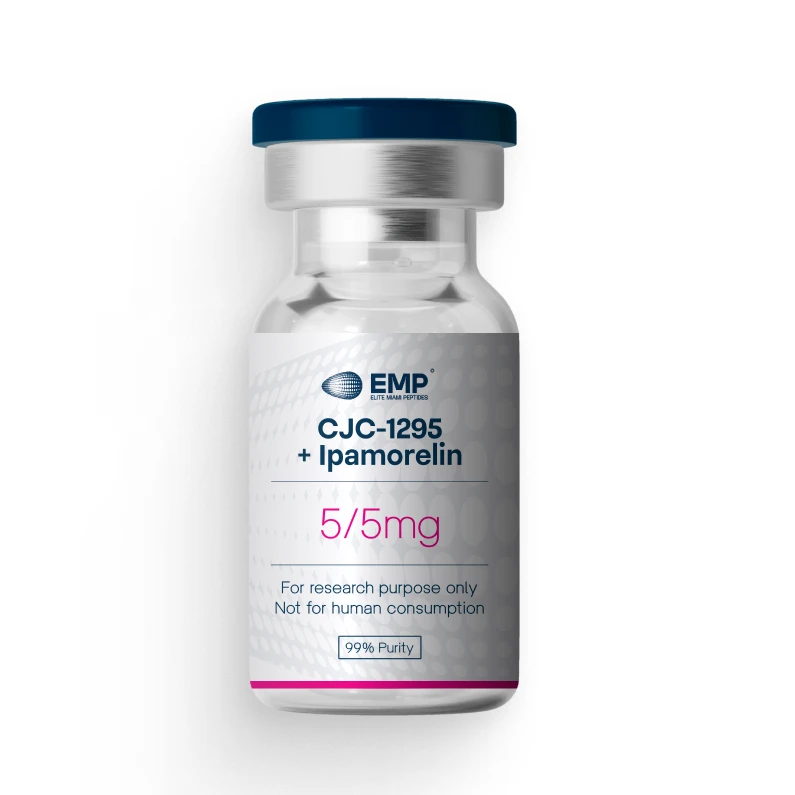
Consumers usually encounter CJC-1295 Ipamorelin products in two main forms: sterile peptide vials (reconstitutable powders) intended for injection, and sometimes “mixed” kits that simplify reconstitution. Because you asked for product direction, I’ll speak in general consumer terms rather than brand-specific promises.
Common product forms:
- Reconstitutable vials (powder): often supplied as CJC-1295 and ipamorelin separately or as part of a combo kit.
- Pre-measured kits: sometimes labeled with milligram amounts for easier tracking.
- Research-use-consumable labeling: many peptide products are marketed in ways that do not carry standard pharmaceutical approvals.
Quality signals to look for (practical checklist):
- Clear labeling of what’s inside: amounts per vial, purity claims, and documentation availability.
- Batch-specific documentation: test reports (often described as COAs) tied to a batch number.
- Sourcing transparency: reputable supply chains and consistent manufacturing practices.
- Storage instructions: proper stability guidance for powders and reconstituted solutions.
- Clean handling guidance: reconstitution and administration instructions that minimize contamination risk.
About “No DAC” vs other variants: You may see CJC-1295 versions described differently online. “DAC” (if mentioned by a seller) relates to how long a peptide may act. However, the most important consumer reality is that different forms can be treated differently in routines—so dosing and expectations should not be copied blindly from another format.
YouTube overview video (embed):
Comparison of Common Options
Below is a consumer-style comparison of common ways people buy/structure CJC-1295 + Ipamorelin routines. “Typical dose/use” varies widely online; treat this as context, not a recommendation.
| Format | Typical Dose/Use | Pros | Cons | Cost | Best For |
|---|---|---|---|---|---|
| Separate vials (CJC-1295 + ipamorelin) | Follow label/COA amounts; daily or near-daily routines are common online | Flexible tracking; easier to adjust each component | More handling steps; more room for mixing errors | Mid-range | You like careful recordkeeping |
| Combo kits (pre-packaged amounts) | Pre-set total milligrams intended for a defined timeframe | Less planning; simple “use-by” tracking | Harder to scale down if you react poorly | Often convenient, sometimes pricier | You want a structured starter experiment |
| Long-acting CJC-1295 variant bundles | Often used with less frequent emphasis depending on variant description | Some users prefer fewer injection planning steps | Fewer people track hormone outcomes precisely; risk perception may be mismatched to variant | Mid to higher | You want consistency and less frequent dosing |
| “No DAC” labeled CJC-1295 with ipamorelin | Often chosen by people comparing “duration” online; still widely variable in practice | Some consumers like the idea of different action profiles | Variant language can be misunderstood; “typical schedules” online aren’t standardized | Mid-range | You’re comparing formats and documenting outcomes |
| Third-party-tested bulk vials (higher documentation) | Buy in larger quantities; track reconstitution carefully | Often better quality transparency when COAs are batch-specific | Upfront cost; requires discipline with storage and handling | Higher upfront, sometimes better value | You want documentation and can handle storage discipline |
Buying Framework and Red Flags
If your goal is an honest answer to does CJC-1295 Ipamorelin affect testosterone for you personally, the buying step is crucial because quality differences can affect side effects and tolerability—even if testosterone ends up unchanged.
Checklist before you buy:
- Do they provide batch-specific documentation? If you can’t find COAs tied to a batch, be skeptical.
- Is labeling clear? Look for spelled-out peptide identities and amounts, not vague marketing.
- Do they publish storage and handling guidance? If instructions are missing or sloppy, contamination risk rises.
- Are prices suspiciously low? “Too cheap” often means the quality story is unclear.
- Do they avoid absolute claims? If a seller promises guaranteed hormone outcomes, you’re in hype territory.
- Is there transparency about reconstitution? You need clear directions and tools guidance.
- Can you track your costs? Keep a simple per-day cost estimate based on how long the kit lasts.
Consumer-style cost note (example): In my experience shopping around, peptide kits can range widely. A “starter” kit might look affordable until you calculate per-day cost for the time you actually plan to run it (including reconstitution materials). If your plan is a short 2-week observation, don’t buy something that tempts you into “pushing through” side effects simply because you already paid.
Common Mistakes and How to Avoid Them
- Copying a dosing routine without context: Women 55+ often have different baseline health, different sleep patterns, and different medication profiles than the people posting online.
- Ignoring the testosterone question entirely and only watching “how you feel”: Feelings matter, but if you’re specifically worried about testosterone effects, it’s rational to discuss labs with a clinician rather than guessing.
- Changing too many variables at once: If you start a workout program, adjust supplements, change bedtime, and begin CJC-1295 Ipamorelin simultaneously, it becomes impossible to interpret outcomes.
- Continuing through red flags: If you get persistent headaches, sleep worsens, or you feel “endocrine off,” stop and reassess rather than “waiting it out.”
- Assuming oral equals “safer”: People sometimes ask about oral versions. The key consumer reality is that peptide administration matters—if a product claims oral delivery for peptides, you should treat that claim as a documentation-and-mechanism question and prioritize credible testing info.
YouTube overview video (embed):
FAQ
Is it proven that CJC-1295 Ipamorelin affects testosterone in women?
It’s not proven in the strong, standardized way most people want. The mechanistic conversation around the pituitary–GH/IGF-1 axis is plausible, but human evidence that specifically demonstrates consistent testosterone changes in women (especially 55+) for this exact stack is limited. Treat “does CJC-1295 Ipamorelin affect testosterone” as an individualized, observational question rather than a settled fact.
How long does it take for CJC-1295 Ipamorelin to show any testosterone-related effects?
If anything changes, people typically notice symptom shifts within days to a couple of weeks. But symptom timing doesn’t equal hormone timing, and it doesn’t guarantee testosterone changes. If you’re concerned about testosterone specifically, a lab-based approach (with clinician input) is the only way to move from “possible” to “measured” outcomes.
What side effects should I watch for with CJC-1295 Ipamorelin in a testosterone context?
Common consumer concerns include headaches, sleep disruption, feeling jittery or emotionally “off,” and general endocrine-type discomfort. If any symptom is persistent or worsens—especially headaches that don’t match your pattern—stop the experiment and reassess. Don’t push through red flags hoping it will “stabilize.”
Can CJC-1295 Ipamorelin combine with other supplements that affect testosterone?
Many supplements and medications can influence hormones, energy, or sleep. Combining increases complexity and makes it harder to attribute effects to CJC-1295 Ipamorelin. If your goal is understanding testosterone, it’s usually smarter to keep the rest of your stack stable and only change one variable at a time.
Is oral CJC-1295 Ipamorelin better than injection, alternative formats, or research-only options?
In most consumer conversations, peptide administration is frequently discussed in injectable terms. “Oral” or alternative formats can exist in the market, but their effectiveness and how they influence hormone pathways may differ. For your specific question about whether CJC-1295 Ipamorelin affects testosterone, prioritize documentation, clarity of ingredient identity, and credible quality signals—more than format marketing.
A Practical 2-Week Experiment Framework
If you want a rational, consumer-like way to evaluate does CJC-1295 Ipamorelin affect testosterone for you, here’s a structured approach focused on observation rather than guarantees.
Before you start (Day -1 to Day 0):
- Pick one goal: sleep quality, energy stability, or body recomposition signals. Make it a single primary outcome.
- Log baseline notes: sleep duration, wake-ups, mood, libido (if relevant), skin changes (oily/acne), hair changes, and any unusual headaches.
- Optional but powerful: if your clinician agrees, consider baseline labs for hormones you care about (including testosterone-related markers).
During the trial (Days 1–14):
- Keep bedtime and meal timing consistent.
- Keep your supplement/med stack stable (no new additions mid-trial).
- Track 3–4 metrics daily: sleep quality (subjective rating), headache presence, mood/irritability, and any skin/libido/hair signals.
- At least once within the first week, do a “tolerability check.” If side effects worsen, stop rather than pushing through.
After the trial (Days 15–17):
- Stop or return to your pre-trial routine (based on your product guidance).
- Continue symptom logging for 2–3 days to see whether changes fade.
- Make a decision: continue cautiously, pause, or stop—based on tolerability and your primary outcome.
How to interpret testosterone concerns without overreaching: If you suspect testosterone involvement (for example, changes in libido or skin), don’t assume causality. Use your symptom trend to decide whether you should pursue labs or consult a clinician.
About the Author
Maya R. Davenport is a long-form consumer supplement reviewer who focuses on real-world tolerability, documentation quality, and outcome tracking for adults 45+. Over the past several years, Maya has completed repeat “try-and-log” experiments across sleep- and metabolism-adjacent supplement categories, with particular emphasis on how products affect day-to-day energy, mood, and adverse reactions. Maya’s reviews are written from the perspective of someone who keeps consistent routines, tracks symptoms in a simple log, and stops quickly when red flags appear.
Disclaimer: This article is for information and personal decision support only. It is not medical advice and does not diagnose, treat, or cure. If you have hormone-sensitive conditions, complex medications, or you want to know whether CJC-1295 Ipamorelin affects testosterone in a measurable way, discuss options with a qualified clinician—especially if you plan to use peptides.
Discussion